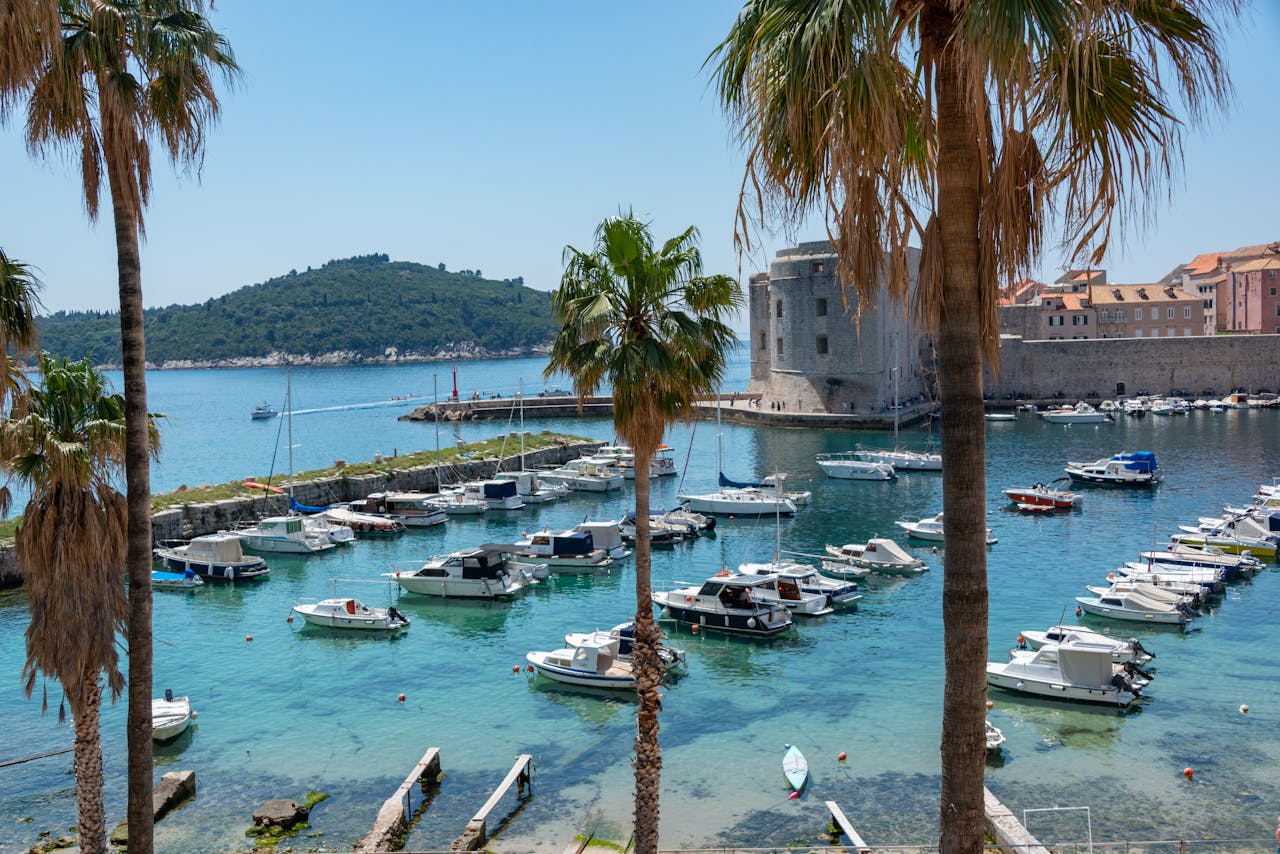
The latest report from Arvio paints a clear picture: the housing market in Croatia continues surging, though with some signs of caution emerging.
Table of Contents
The Croatian real-estate market in 2025 is defined by strong price growth, regional diversification, and a noticeable shift in buyer behavior. According to Arvio’s Market Analysis Q3 2025, the first nine months of the year recorded 85,562 property transactions across the country.
Breaking it down by quarters:
- Q1: 26,909 transactions
- Q2: 30,186 transactions
- Q3: 28,468 transactions
Although activity remained high, the total number of transactions in Q1–Q3 was around 13% lower compared to the same period the year before. This indicates a cooling trend driven largely by regulatory changes.
Regional Distribution of Demand
The strongest activity, measured by share of all transactions, remains in administrative and coastal hubs:
- City of Zagreb: 14.0% of all transactions
- Istria County: 9.9%
- Primorje-Gorski Kotar County: 7.9%
However, one of the most striking data points applies to Lika-Senj County, which recorded a 59% quarter-to-quarter increase in property transactions. This signals a growing interest in regions traditionally seen as less competitive or lower-priced.
Sharp and Widespread Housing Price Growth
Data from Croatia’s official housing price index, as presented in the Arvio report, reveals that residential property prices grew strongly in 2025. In Q2 2025, prices increased:
- 4.4% quarter-on-quarter
- 13.2% year-on-year
Price trends differ notably between new construction and existing housing:
- Newly built properties: +1.5% quarterly; approx. +11% annually
- Existing properties: +5.2% quarterly; approx. +13.7% annually
This shows that the bulk of price acceleration comes from the existing-home market, suggesting that buyers prefer ready-to-move-in units over waiting for new development.
Regional Price Dynamics
Price growth has been broad, but not uniform. In Q2 2025:
- Zagreb: +3.3% quarterly / +12.2% annually
- Adriatic Coast: +5.1% quarterly / +12.3% annually
- “Other Regions”: +5.6% quarterly / +18.2% annually
The last category is especially important: while Zagreb and the coast continue to show steady appreciation, the steepest price increases are now in the country’s interior. This signals a clear shift in demand toward more affordable or less saturated markets.
Impact of Financial Policy and Buyer Behavior
Much of Q2’s high volume was driven by banks offering favorable mortgage conditions early in 2025. This changed on 1 July 2025, when stricter credit regulations took effect. Buyers rushed to finalize purchases before this deadline, making Q2 unusually active and causing a predictable slowdown in Q3.
The data shows:
- High demand prior to new credit rules
- Immediate cooling after regulations tightened
- Sustained upward pressure on prices despite fewer transactions
This combination points to a market with strong underlying demand, but also one sensitive to financing conditions.
What These Trends Mean Going Forward
For buyers: rising prices and stricter loan conditions mean that affordability may continue to decline. With existing homes showing the strongest appreciation, buyers may also find fewer bargains in the resale market.
For investors: the consistent quarter-to-quarter growth and double-digit annual price increase suggest the Croatian housing market remains attractive—especially in “other regions,” where returns have recently been highest.
For the market overall: the shift of demand into inland regions could rebalance long-term development and reduce pressure on coastal hotspots. However, if transaction volumes continue to decline under tightened credit rules, price growth may begin to slow in upcoming quarters.
Source: Arvio — Market Analysis Q3 2025, Croatia