Real estate has long been considered a cornerstone of wealth preservation. However, in 2026, investment decisions are no longer driven purely by yields and growth forecasts — geopolitical stability has become a critical factor.
Table of Contents
Recent tensions and conflict developments involving Iran and the broader Middle East have reshaped investor sentiment globally. Markets once perceived as secure can rapidly shift, reinforcing a key principle: capital is highly sensitive to risk and moves quickly when uncertainty rises.
This updated analysis compares the Alpe-Adria region — primarily Slovenia and Croatia — with Dubai, under today’s evolving conditions.
1. Alpe-Adria Region: Stability Gains New Value
Slovenia – From Stability to Strategic Safe Haven
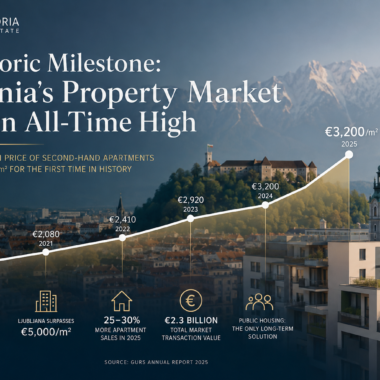
Slovenia’s real estate market has remained relatively stable into 2026. After a period of strong growth, price increases have moderated, with prime residential properties in Ljubljana still exceeding €4,000 per m².
What has changed is not the pricing — but the perception of value.
In times of geopolitical tension, EU-based markets with strong legal systems and political stability are increasingly viewed as safe havens for capital.
Key advantages (now even more relevant):
- EU regulatory and legal protection
- Political and economic stability
- Increasing demand from foreign buyers seeking security
- Consistent long-term appreciation
Considerations:
- Lower yields (3–4% gross in prime locations)
- Limited short-term speculative upside
2026–2028 Strategy Update:
Urban apartments in Ljubljana and other university cities are no longer just “stable investments” — they are becoming defensive assets in uncertain times.
Croatia – Growth with Selective Risk
Croatia continues to benefit from strong tourism and foreign buyer demand, particularly along the coast. Prime locations in Split and Istria remain near €3,800–4,000 per m².
However, the investment narrative is shifting.
Tourism-driven markets are inherently more sensitive to global instability. Any disruption in travel flows can quickly impact rental yields.
Advantages:
- Strong international appeal
- Higher growth momentum than Slovenia
- Short-term rental potential
Risks (more visible in 2026):
- Dependence on tourism cycles
- Seasonal income volatility
- Exposure to external shocks
Updated Strategy:
- Prime coastal properties remain attractive long-term
- Increasing focus on Zagreb and urban centers for stable rental demand
- Investors are becoming more selective and risk-aware
2. Dubai: High Yield Meets Geopolitical Reality
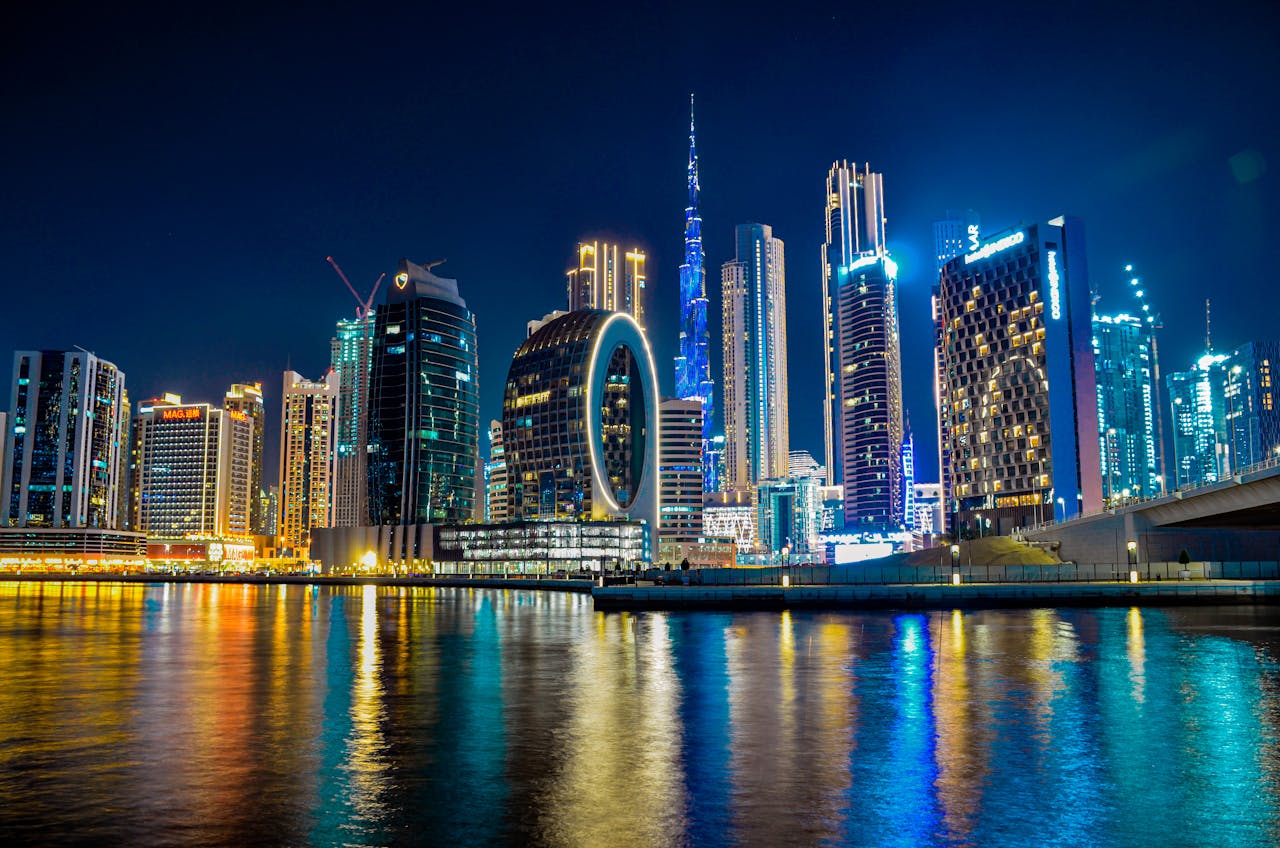
Dubai has been one of the strongest-performing real estate markets globally, with rental yields between 6–8% and significant post-pandemic price growth.
However, 2026 introduces a new variable: regional geopolitical risk.
While the United Arab Emirates remains politically stable, its proximity to broader Middle East tensions affects investor perception.
A Critical Lesson: Capital Is a “Flighty Bird”
Historically, periods of conflict — including recent tensions linked to Iran — have demonstrated how quickly capital can exit a region.
Even without direct impact, perceived risk alone can trigger:
- Reduced transaction volumes
- Slower price growth
- Temporary capital outflows
There are already indications that some investors are:
- Diversifying into European real estate
- Acquiring properties in stable EU jurisdictions
- Reducing exposure to geopolitically sensitive regions
Dubai Outlook: Risk or Opportunity?
The outlook for Dubai is no longer one-dimensional — it depends heavily on timing and investor strategy.
Short-term risks (2026–2027):
- Increased supply entering the market
- Potential demand softening if geopolitical tensions persist
- Higher volatility compared to European markets
But also a key counterpoint:
Periods of uncertainty often create entry opportunities.
Some investors will view:
- Potential price corrections
- Temporary sentiment-driven declines
as a strategic entry point before the next growth cycle.
Post-conflict scenario:
If regional tensions stabilize, Dubai could experience:
- Renewed capital inflows
- Accelerated price recovery
- Strong upside in undervalued segments
3. The Core Question: What Is “Safe” in 2026?
The biggest shift in 2026 is not numerical — it is psychological.
Real estate investment is inherently long-term. Therefore, investors must now consider:
- How stable will this region be in 5–10 years?
- How quickly can risk perception change?
- Will this location attract or repel capital in times of crisis?
A location can move from “safe” to “uncertain” faster than ever.
4. Capital Flows Are Changing
Emerging data and market behavior suggest a clear trend:
- Capital is increasingly flowing toward stability (EU markets)
- Investors are geographically diversifying portfolios
- Safe, regulated environments are gaining premium status
The Alpe-Adria region is benefiting from this shift, not because of rapid growth — but because of predictability and security.
5. Conclusion: Strategy Over Speculation
Alpe-Adria Region (Slovenia & Croatia):
- Best for long-term stability and capital preservation
- Increasingly attractive as a geopolitical safe haven
- Lower returns, but lower risk
Dubai:
- Higher yield and higher volatility
- Short-term uncertainty due to regional dynamics
- Potential long-term opportunity if entering at the right moment
Final Thought
In 2026, the key question is no longer just “Where can I earn the most?”
It is:
“Where will my capital feel safest — and still grow over time?”
Because in today’s world, returns follow stability — and capital never waits for uncertainty to resolve.